


Do Cover Letters Still Matter?
Why employers ask for them and how to use AI the right way.
The quick answer: Yes, cover letters still matter. A cover letter is a short, one-page introduction that tells an employer which role you’re applying for, why you want it and why you’re a good fit. Employers ask for one because it shows what a resume can’t: your motivation, how you communicate and your attention to detail. You can use AI to help draft it, but every word needs to be true, tailored to the job and checked by you before you hit send.
Key takeaways
- The main job of a cover letter is to make the employer want to read your resume.
- Keep it to one page, address it to a real person where you can, and write a fresh one for every role.
- Around two in three Australian candidates now use generative AI on their CVs and cover letters, so a polished but generic letter no longer stands out.
- AI is a drafting tool, not the author. Never let it add skills, results or experience you don’t have.
- Check every letter three times: once for facts, once for fit and once for voice.
What is a cover letter?
A cover letter is a short letter, usually one page, that you send with your resume when you apply for a job. It introduces you, names the role and explains why your skills and experience suit it.
It isn’t a repeat of your resume. A cover letter should inspire the reader to keep reading your application, rather than summarise your resume. The Australian Government’s Job Jumpstart puts it even more simply: the main role of a cover letter is to make an employer want to read your resume.
Why do recruiters and employers ask for cover letters?
A resume lists what you’ve done. A cover letter shows how you think and why you’re applying. When a recruiter or hiring manager reads one, they’re usually looking for quick answers to five questions.
- Did you read the job ad? A tailored letter shows you understand what the role involves and what the employer needs.
- Why this role, and why this employer? Motivation matters. Employers want people who actually want the job, and who are likely to stay.
- Can you communicate clearly? For customer service, administration, team leader, supervisor and professional roles, your cover letter is also a writing sample.
- Do you pay attention to detail? The wrong company name, a typo or leftover template text says a lot. In workplaces where following procedures matters, such as food production, pharmaceutical manufacturing and warehousing, that signal carries real weight.
- Is there context your resume doesn’t explain? Changing careers, returning to work after a break, relocating or moving into a new industry are all easier to explain in a few honest sentences.
Do you always need a cover letter?
Not always. Some employers ask for a cover letter and responses to selection criteria, while others only ask for a resume. Many warehouse, production and labour hire roles use a quick online application or a resume only.
A simple rule of thumb:
- If the job ad asks for one, treat it as required. Applications without it may not be considered.
- If it’s optional, a short, tailored letter is usually worth the extra time.
- If you’re applying through a recruitment agency, your recruiter is often the first person who reads it. A few lines on your availability, the shifts you can work, your licences and tickets, and how you’ll get to site can help them match you to the right role faster.
The advantage: what a good cover letter does for you
- It helps you stand out. Not every candidate takes the time to write a tailored cover letter, so the ones who do are easier to notice.
- It connects the dots. You can point directly to the must-haves in the job ad and show where you’ve done them before.
- It explains what a resume can’t. Gaps, career changes and your reasons for moving are easier to address in your own words.
- It shows you’ve done your homework. One sentence about the employer’s products, sites or values shows genuine interest.
- It gives the interviewer something to ask about. A strong example in your letter often becomes the first question in your interview, which means you get to talk about something you’re proud of.
The opportunity in 2026: AI has made a genuine cover letter worth more
Generative AI has changed how Australians apply for jobs. Morgan McKinley’s 2026 Global AI Report found that 65% of Australian candidates use generative AI to write or refine their CVs and cover letters. The same report found 14% of Australian employers automatically reject applications they identify as AI-generated, seven times the global rate of 2%.
Accuracy is a concern too. Remote’s 2024 Global Workforce Report found 83% of Australian businesses had received AI-generated resumes containing false information in the previous six months.
When most applications sound polished and much the same, a letter that is specific, honest and clearly written by a real person is the one that gets noticed. That’s the opportunity. AI can help you get there faster, as long as you stay in charge of what it says.
The rules for using AI to draft a cover letter
There’s no law against using AI to help write your own job application. There are, however, clear expectations from employers and recruiters. Follow these six rules.
- Follow the employer’s instructions. If a job ad asks you not to use AI, or asks for something written in your own words, respect it. Employers notice. One Australian business that asked applicants for a customised cover letter without AI found that 66 of the 174 applications it received clearly used AI anyway.
- Use AI to shape your letter, not to invent it. Using AI for structure, grammar, tightening your wording or tailoring to the ad is generally seen as reasonable. Using it to create achievements, exaggerate responsibilities or claim skills, licences or tickets you don’t hold is dishonest, and it will catch up with you.
- Start with your own material. Give the tool the job ad, your real experience and your genuine reasons for applying. Generic input produces a generic letter.
- Protect your personal information. Before pasting anything into an AI tool, remove details you wouldn’t want stored elsewhere, such as your tax file number, licence numbers, home address and your referees’ contact details.
- Be ready to back up every line. If you mention an achievement, be ready to explain what you personally did, what got in the way and what the result was. Interviews are increasingly designed to test exactly this.
- Be honest if you’re asked. Canva’s New Year, New Job research found most hiring managers would like candidates to disclose AI use. A straightforward answer works best, for example: “I used AI to help with structure and wording. The experience and examples are all mine.”
Double and triple check: the three-pass review
AI tools can produce confident text that is simply wrong, and they can’t know which details are true for you. That’s why the final check is your job, every time.
Read your letter three separate times, each with a different purpose. If you can, leave a day or two between writing and checking, and ask someone you trust to read it as well.
Check 1: Facts
- Is every claim true?
- Do dates, job titles, licences, tickets and qualifications match your resume exactly? Your cover letter shouldn’t introduce experience that isn’t on your resume
- Has the AI added anything you didn’t tell it, like a statistic, an asterisk, a software skill or a responsibility? If so, delete it.
Check 2: Fit
- Are the company name, role title and contact name correct?
- Does the letter address the key requirements of this specific job ad?
- Is there any leftover placeholder text such as “[relevant experience]” or chatbot phrasing like “Here’s a more polished version of your cover letter”? Australian employers have shared real examples of both landing in their inbox.
Check 3: Voice
- Read it aloud. Does it sound like you?
- Would you use these words in an interview? If not, swap them for words you would.
- Cut anything overblown. Clear, simple language reads as more confident than buzzwords.
Before you hit send
- One page or less
- Addressed to a real person where possible
- Every fact checked against your resume
- Tailored to this role and this employer
- No placeholders, template text or AI phrasing
- Read aloud and checked by someone else
- Saved as a PDF with a clear file name, such as FirstName-LastName-Cover-Letter.pdf
A simple cover letter structure that works
Keep it to one page and three or four short paragraphs.
- Opening: Name the role, where you saw it and one sentence on why you’re a strong fit.
- Your evidence: Give two or three short examples that match the key requirements in the ad. The STAR method (Situation, Task, Action, Result) is a useful way to structure them.
- Practical details: For shift-based, warehouse and production roles, include your availability, relevant licences and tickets, and how you’ll get to site.
- Close: Thank the reader, say you’d welcome the chance to discuss the role, and include your phone number and email.
Frequently asked questions
Do employers in Australia still read cover letters?
Many do, particularly when the job ad asks for one. Australian Government guidance from JobAccess notes that most job applications need a cover letter, and recruiters often use it to decide whose resume to read first.
Is it OK to use ChatGPT or other AI tools to write a cover letter?
Generally yes, provided the employer hasn’t asked you not to, everything in the letter is true, and you’ve reviewed and edited it so it reflects your own experience and voice.
Can employers tell if a cover letter was written by AI?
Not always with certainty. Generic phrasing, details that don’t match your resume and leftover placeholder text are common giveaways, and an interview will quickly show whether you can speak to what you wrote.
How long should a cover letter be?
One page, usually three or four paragraphs, unless the job ad says otherwise.
Should I write a new cover letter for every job?
Yes. Government guidance, consistently recommends tailoring your letter to each role and organisation rather than sending the same one everywhere.
Do I need a cover letter for warehouse, production or labour hire jobs?
Only if the ad asks for one and that is not usually the case. Your resume should be able to demonstrate your skills. Even so, a few lines covering your availability, licences and tickets, and why you want the role can help you stand out.
Looking for your next role?
Blaze Staffing works with candidates across Melbourne, Sydney and Brisbane in food production, pharmaceutical, manufacturing, warehousing and distribution, and maintenance and trades, plus professional roles through our Professional division. Browse current vacancies or get in touch with our team.
We’re always happy to talk through your application.
This article provides general information only. Always follow the specific instructions in each job advertisement.
Sources
-
- JobAccess (Australian Government): Writing a job application and cover letter
- Job Jumpstart (Australian Government): How to write a cover letter
- Queensland Government: How to write a resume and cover letter
- NSW Government: Cover letters
- University of Sydney: How to write a cover letter
- Morgan McKinley: The Algorithm Arms Race (2026 Global AI Report), October 2026
- The Sector: Remote 2024 Global Workforce Report coverage
- SmartCompany: AI-written job applications
- SmartCompany: Canva New Year, New Job report

Related Blogs
Read news and insights into a variety of industries

1 July 2024 (and beyond): New Minimum Wage and Superannuation Updates
As businesses plan their budgets for the new financial year, estimating payroll costs is essential. This year, we are fortunate to have received an early announcement from the Fair Work Commission regarding their decision on the annual Minimum Wage Review. This early insight will allow businesses to better forecast their wage costs for the next…

Top 3 Benefits of Choosing a Professional Recruitment Agency Over an In-House Talent Acquisition Team
In the dynamic realm of talent acquisition, businesses are constantly seeking ways to optimize their recruitment processes to secure top-tier talent efficiently and effectively. One common dilemma faced by companies is whether to rely on an in-house talent acquisition team or enlist the expertise of a professional recruitment agency. In this blog post, we’ll delve…
Navigating Recent Changes in Australian Employment Laws: A Guide for Employers
In the ever-evolving landscape of Australian employment laws, it’s essential for HR professionals and employers to stay abreast of recent developments to ensure compliance and foster a conducive work environment. One significant recent change is the Fair Work Amendment (Closing Loopholes) Bill 2023, colloquially known as the “Closing the Loopholes Bill,” which brings about substantial…
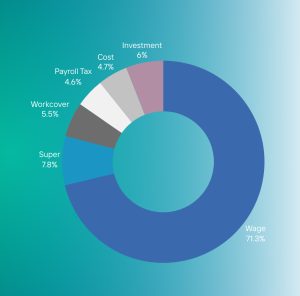
High ROI Recruitment: Less than $2/hour!
Understand the Labour Hire Charges and Unlock Business Growth Have you ever pondered over the intricate dance of talent acquisition within your organisation? Or marvelled at the seamless integration of diverse skill sets across departments? Well, let’s unpack the essence of labour hire recruitment agencies and their contributions to the tapestry of your workforce. Picture…
Navigating Business Uncertainty in 2024: The Strategic Advantages of Partnering with a Temporary Placement Agency
As we embark on the intricate journey of navigating the financial landscape in 2024, it’s prudent to discuss a strategic ally: collaborating with a temporary placement agency (also commonly known as a labour hire agency). Let’s explore the myriad ways in which such collaboration can furnish your business with a competitive edge, offering flexibility, cost-effectiveness,…

The Secret to Staying Ahead
Future-Proofing Your Staffing Hires Let’s face it – the job landscape is constantly evolving. With advancements in technology and an ever-increasing demand for specialised skills, it’s easy to feel overwhelmed and fall behind. The secret to staying ahead of the game all lies in the hiring process. By carefully selecting candidates who have the potential…
