



Why Lengthy Interview Processes are costing Employers Great Workers.
In today’s labour market, particularly across manufacturing, warehousing, logistics and manual labour roles, one truth is becoming increasingly clear: speed to hire is no longer a “nice to have” – it is a competitive advantage.
Yet many employers continue to apply white-collar hiring frameworks to blue-collar and operational roles. Multiple interview rounds, extended approval processes, management interviews and drawn-out decision-making may feel thorough, but in reality they are often the very reason roles remain unfilled.
At Blaze Staffing, we work closely with employers and candidates across operational and manual roles every day. What we consistently see is this: by the time the next interview is scheduled, the candidate has already accepted another offer.
We explore here why frictionless hiring matters, what the data tells us about candidate behaviour, and how employers can balance risk with speed, without compromising on quality.
The Reality of the Manual Labour Hiring Market
Forklift drivers, production workers, pick-packers and machine operators, fitters and drivers are in high demand. These are roles that keep businesses running, supply chains moving and production targets met. Unlike professional roles, candidates in these positions are often:
- Actively employed and open to moving quickly
- Interviewing with multiple employers simultaneously
- Less tolerant of long or uncertain hiring processes
- Motivated by job security, consistent hours and immediate start dates
According to the Australian Bureau of Statistics, job mobility in lower-skilled and operational roles is significantly higher than in professional occupations, reflecting both demand and opportunity in these sectors (ABS, 2023).
When a capable worker is available and motivated, delays don’t result in better decisions, they result in missed opportunities.
When “Thorough” Becomes a Barrier
It is entirely understandable that employers want to reduce risk. We understand hiring is costly, and a poor fit can impact productivity, morale and safety. However, there is a growing disconnect between perceived diligence and actual hiring outcomes.
Research from the Society for Human Resource Management (SHRM) shows that the optimal number of interviews for most roles is two at most. Beyond this point, predictive value plateaus, while candidate drop-off increases significantly (SHRM, 2016).
For manual or operational roles, the return on additional interview rounds is even lower. These roles are typically:
- Skills-based rather than credential-based
- Measured by performance, reliability and safety
- Learned and assessed most effectively on the job
Extending the hiring process does not improve quality – it simply increases friction.
Candidates Are Making Decisions Faster Than Employers
A study by LinkedIn’s Economic Graph found that top candidates are off the market within 10 days, with many accepting offers within a week (LinkedIn Talent Solutions, 2021). This timeframe is often even shorter in industries facing labour shortages.
While employers may still be “reviewing feedback” or scheduling another interview, candidates are making practical decisions based on:
- Which employer moved fastest
- Which role offered certainty
- Which company demonstrated respect for their time
Speed signals intent. Delays signal hesitation.
Trials and Trial Days:
Beyond compliance, trial days introduce friction:
- Candidates may already be working elsewhere
- They may be unwilling to take unpaid time off
- Competing employers are not requiring them
In practice, many skilled workers simply opt out.
The Frictionless Hiring Advantage
A frictionless hiring process does not mean a careless one. It means designing a process that reflects the realities of the role and the market.
Effective hiring for manual and operational roles typically includes:
- One structured interview (in person or virtual)
- Clear role expectations and safety requirements
- Immediate decision-making
- Fast offer turnaround
Employers who streamline their process are consistently rewarded with:
- Higher offer acceptance rates
- Reduced time-to-fill
- Lower vacancy-related downtime
- Stronger employer reputation
According to the Harvard Business Review, companies that reduce hiring complexity improve both hiring outcomes and retention by removing unnecessary decision points (HBR, 2019).
A Smarter Alternative: Temporary-to-Permanent Hiring
One of the most effective ways to balance speed with confidence is temporary or contract-to-permanent employment.
This approach allows employers to:
- See real-world performance, not interview performance
- Assess cultural and team fit organically
- Reduce long-term hiring risk
- Move quickly without overcommitting
For candidates, it offers immediate work, income security and the opportunity to prove themselves through action – not interviews.
Research published in the Journal of Labour Economics shows that probationary or temporary employment periods are often more predictive of long-term success than pre-employment screening alone (Autor & Houseman, 2010).
In other words, performance on the job beats performance in an interview room.
What Candidates Want (And Expect)
Modern workers, including those in manual roles, expect hiring processes to be:
- Respectful of their time
- Transparent
- Decisive
- Aligned with the role itself
A lengthy, multi-stage interview process for a forklift driver or production worker can feel disconnected and even dismissive. It suggests a lack of understanding of the role or the market.
The World Economic Forum has highlighted that employer agility is now a key determinant of talent attraction, particularly in essential and operational roles (WEF, 2022)
Helping Employers Hire Better, Not Slower
At Blaze Staffing, our role is not just to fill vacancies – it’s to help employers hire in a way that works.
We partner with businesses to:
- Design hiring processes that match role requirements
- Reduce unnecessary hiring friction
- Move quickly on strong candidates
- Use temporary staffing strategically
- Secure talent before competitors do
The goal is simple: the right people, in the right roles, at the right time.
In a tight labour market, speed is not reckless – it is responsive.
Employers who continue to rely on lengthy interview processes for manual and operational roles risk losing capable, motivated workers to competitors who understand one fundamental truth:
The best candidates don’t wait.
By embracing streamlined hiring, reducing friction and using temporary employment strategically, businesses can secure the people they need – without sacrificing quality or control.
If you’d like to review your current hiring process or explore faster, more effective workforce solutions, Blaze Staffing is here to help.
References
- Australian Bureau of Statistics (2023). Labour Mobility, Australia.
- Society for Human Resource Management (SHRM) (2016). How Many Interviews Are Enough?
- LinkedIn Talent Solutions (2021). Global Talent Trends.
- Fair Work Ombudsman (2023). Unpaid Work and Trials.
- Harvard Business Review (2019). The Case for Shorter Hiring Processes.
- Autor, D. & Houseman, S. (2010). Do Temporary-Help Jobs Improve Labor Market Outcomes? Journal of Labour Economics.
- World Economic Forum (2022). The Future of Jobs Report.

Related Blogs
Read news and insights into a variety of industries

Make Sure Your Hiring Practices Aren’t Doing Your Brand Damage.
For businesses operating in fast-paced, high-compliance sectors like manufacturing, food production, and pharmaceuticals, recruitment is often seen as a matter of urgency. You need boots on the ground. You need people yesterday. But here’s the hard truth: if your hiring process is rushed, disjointed, or inconsistent, it’s not just costing you candidates-it’s damaging your brand….
Who Holds the Risk? Why Workforce Management Needs More Than Just ‘Good Enough’ Support
Managing a workforce is no small task. If you’re an Operations Manager, Production Manager, or Business Owner, you already know: when something goes wrong with your staff, the liability ultimately sits with you. In Australia, under Work Health and Safety (WHS) laws, employers (and host businesses using labour hire workers) have significant obligations to ensure…

Want More Shifts? Here’s How to Become a Recruiter’s Go-To Candidate
If you’re a casual worker looking to pick up more shifts, get first call-ups, or lock in ongoing assignments, here’s some good news: it’s not always about having the most experience. In fact, recruiters often value attitude, reliability, and flexibility just as much- sometimes even more. So, how do you stand out in a…

Meeting FSANZ & GMP Standards starts with the right workforce.
In highly regulated industries such as food manufacturing, bakery production, and pharmaceuticals, compliance is not just a box-ticking exercise -it’s an operational imperative. Whether you’re producing baked goods for retail shelves or compounding medicines in sterile facilities, strict adherence to food and safety standards is essential. In Australia, these standards are governed primarily by…

The Compliance Checklist – Upcoming Changes Affecting Small Business Compliance
Upcoming Changes Affecting Australian Businesses in 2025 & Beyond As Australian businesses navigate a rapidly evolving regulatory landscape, staying informed and compliant is more critical than ever. A series of legislative changes are set to impact businesses in 2025 and beyond, covering tax, employment law, and superannuation. Partnering with a knowledgeable staffing agency like Blaze…
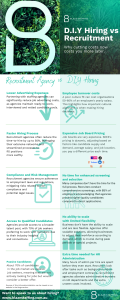
DIY Hiring vs Recruitment
Sources: https://www.linkedin.com/pulse/top-recruitment-agency-statistics-you-should-know-adoffshore-ionje/ https://flair.hr/en/blog/hiring-statistics/ https://www.ibisworld.com/au/industry/employment-recruiting-agencies/1463/ https://workstaff.app/blog/staffing-industry-statistics
