


On 26 June 2026, Victoria’s Labour Hire Authority (LHA) cancelled the labour hire licence of Hudson Global Resources Pty Ltd, one of the best-known names in Australian recruitment. The regulator found the company’s directors were not fit to run a labour hire business, citing widespread legal non-compliance and significant outstanding debts. From 10 July 2026, Hudson could no longer lawfully supply labour hire workers in Victoria.
Hudson was not alone. In June 2026 alone, the LHA cancelled nine more licences and refused another eight applications or renewals. Across the first half of 2026, Victoria refused or cancelled close to 200 licences.
If you host labour hire workers, these numbers matter to you. Here is why.
The host is not a bystander
Many businesses assume that once they sign with a labour hire provider, pay rates, penalties, super and conditions are the provider’s problem. Operationally, that is true. The provider is the employer of record and runs payroll.
Legally, the picture is different. In every state with a licensing scheme, it is an offence to use an unlicensed labour hire provider, not just to be one. The responsibility to check sits with the host.
In Victoria, penalties for using an unlicensed provider can exceed $660,000 for a corporation and $160,000 for an individual. Queensland, South Australia and the ACT all run their own schemes with their own penalties, and a licence in one state does not cover work in another.
How underpayment becomes your problem
Licensing and pay compliance are directly connected. To hold a licence, a provider must comply with workplace, tax and superannuation laws, and the people running it must be fit and proper. When a provider underpays award rates, skips penalty rates or falls behind on super, that is exactly the conduct that gets a licence cancelled.
That creates a chain reaction for the host:
- Your provider loses its licence. Keep using it, even for a few days, and you are now committing an offence.
- Your workforce disappears overnight. Workers must be moved to a licensed provider or employed directly, often mid-season, mid-contract or mid-production run.
- Your name is attached to the problem. If a regulator or the Fair Work Ombudsman investigates, your site, your rosters and your supplier choices are part of the story. Under the Fair Work Act, businesses knowingly involved in underpayment can face accessorial liability.
- Your reputation takes the hit. Customers, auditors and buyers increasingly ask who is in your labour supply chain and whether those workers are paid correctly.
The rules just got tougher
From 1 June 2026, Victoria introduced a stricter fit and proper person test, financial viability declarations, and broader checks on a provider’s compliance history. South Australia expanded licensing to every industry from 29 January 2026, with providers required to be licensed by 29 July 2026.
The direction is clear. Regulators are removing operators that cut corners, and they expect hosts to do their homework.
What a good operator looks like
The cheapest charge rate is often the most expensive decision you can make. A rate that looks too good usually means something is being left out, whether that is correct award classification, overtime and penalty rates, super, or insurance.
A provider worth working with will:
- Hold a current licence in every state where you need workers, and show you the licence number without being asked.
- Pay the correct award rates, penalties and loadings, and apply increases like the 4.75% award rise from 1 July 2026 on time.
- Pay super on time, in line with Payday Super rules that now apply every pay cycle.
- Classify workers correctly under the right award or enterprise agreement.
- Be transparent about charge rates, so you can see where the money goes.
- Run proper inductions and share responsibility for safety on your site.
Five checks to run this month
- Search every provider you use on the relevant state licence register.
- Sign up for licence change alerts. Victoria offers a free Follow my Providers tool.
- Ask each provider how they calculate charge rates and apply award increases.
- Confirm they are licensed in every state where they supply you.
- Build licence verification into supplier onboarding and review it at least quarterly.
Why businesses choose Blaze Staffing
Blaze Staffing is a licensed national labour hire provider supporting food production, pharmaceutical, manufacturing and industrial businesses. As employer of record, we manage payroll, award interpretation, penalty rates, super and SuperStream data, and we treat compliance as the foundation of every placement, not an afterthought.
Our charge rates reflect what it genuinely costs to employ workers correctly. That is what protects our workers, and it is what protects you.
Talk to Blaze Staffing about your workforce and your risk.
Call 1300 008 005
This article provides general information only and does not constitute legal advice. Labour hire licensing requirements and penalties vary by state and are subject to change. Seek independent advice about your specific obligations. Licensing figures sourced from the Labour Hire Authority (Victoria) monthly licensing action reports and media releases, 2026.

Related Blogs
Read news and insights into a variety of industries

Who Holds the Risk? Why Workforce Management Needs More Than Just ‘Good Enough’ Support
Managing a workforce is no small task. If you’re an Operations Manager, Production Manager, or Business Owner, you already know: when something goes wrong with your staff, the liability ultimately sits with you. In Australia, under Work Health and Safety (WHS) laws, employers (and host businesses using labour hire workers) have significant obligations to ensure…

Want More Shifts? Here’s How to Become a Recruiter’s Go-To Candidate
If you’re a casual worker looking to pick up more shifts, get first call-ups, or lock in ongoing assignments, here’s some good news: it’s not always about having the most experience. In fact, recruiters often value attitude, reliability, and flexibility just as much- sometimes even more. So, how do you stand out in a…

Meeting FSANZ & GMP Standards starts with the right workforce.
In highly regulated industries such as food manufacturing, bakery production, and pharmaceuticals, compliance is not just a box-ticking exercise -it’s an operational imperative. Whether you’re producing baked goods for retail shelves or compounding medicines in sterile facilities, strict adherence to food and safety standards is essential. In Australia, these standards are governed primarily by…

The Compliance Checklist – Upcoming Changes Affecting Small Business Compliance
Upcoming Changes Affecting Australian Businesses in 2025 & Beyond As Australian businesses navigate a rapidly evolving regulatory landscape, staying informed and compliant is more critical than ever. A series of legislative changes are set to impact businesses in 2025 and beyond, covering tax, employment law, and superannuation. Partnering with a knowledgeable staffing agency like Blaze…
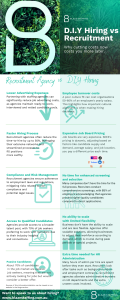
DIY Hiring vs Recruitment
Sources: https://www.linkedin.com/pulse/top-recruitment-agency-statistics-you-should-know-adoffshore-ionje/ https://flair.hr/en/blog/hiring-statistics/ https://www.ibisworld.com/au/industry/employment-recruiting-agencies/1463/ https://workstaff.app/blog/staffing-industry-statistics
How Temporary-to-Permanent Staffing could save your business time and money.
In a competitive business environment, finding and retaining the right talent is a challenge that many companies face. While traditional hiring processes can be time-consuming, temporary-to-permanent (temp-to-perm) staffing offers a strategic alternative that provides flexibility, cost savings, and may ensure a better long-term fit. Rather than independently searching for the “perfect candidate” through a lengthy hiring…
