



Your super is your money: How to check it’s being paid.
A practical guide for workers before Payday Super starts on 1 July 2026
Superannuation is not a bonus or a nice extra. It is part of your employment entitlement and part of your long-term financial future. If your employer is required to pay super for you, that money belongs in your nominated super fund.
The challenge is that many workers only check super once a year, or only look at the super amount shown on their payslip, without confirming whether the money actually reached their fund. That needs to change.
From 1 July 2026, Payday Super will require employers to pay superannuation contributions at the same time they pay wages, with contributions reaching the employee’s nominated super fund within 7 business days. This reform is designed to make unpaid or late super easier to identify and harder to ignore.
You do not need to wait until Payday Super starts. You can check your super now.
Why this matters
Super is your money. If it is not paid, is paid late, or is paid to the wrong fund, your retirement savings can be affected over time. For casual, shift, production, warehouse and labour hire workers who move between jobs or work variable hours, missed super can be easier to overlook.
Most employers do the right thing, but payroll mistakes can happen. Fund details can be wrong. Payments can fail. Amounts can be listed on a payslip before they have actually landed in the fund. That is why workers should check the numbers, not just assume everything is correct.
Check your super fund first
Log in to your super fund account and check the employer contributions that have actually been received. Look at the dates, amounts and employer name.
Check ATO online services through myGov. This can help you see super information reported to the ATO and find any lost or multiple super accounts.
Compare contributions against your payslips. Your payslips should show super contribution information, but the key question is whether the money has actually reached your fund.
Do a quick 12% sense check. For the current financial year, the Super Guarantee rate is 12%. As a rough check, take your ordinary time earnings for the year and multiply that amount by 12%.
Quick super sense check Ordinary time earnings for the financial year x 12% = approximate super that should be paid.
Example: $45,000 x 12% = $5,400
Important: this is a practical sense check, not a final legal calculation. Super is generally calculated on ordinary time earnings until 30 June 2026. From 1 July 2026, the Payday Super rules use qualifying earnings for SG and SGC purposes.
If the amount in your super fund is much lower than expected, do not ignore it. There may be a reasonable explanation, such as quarterly payment timing, salary sacrifice, overtime treatment, fund processing delays, a correction still being processed or a payment made to another fund. However, you should ask the question and get a clear answer.
Payroll checks
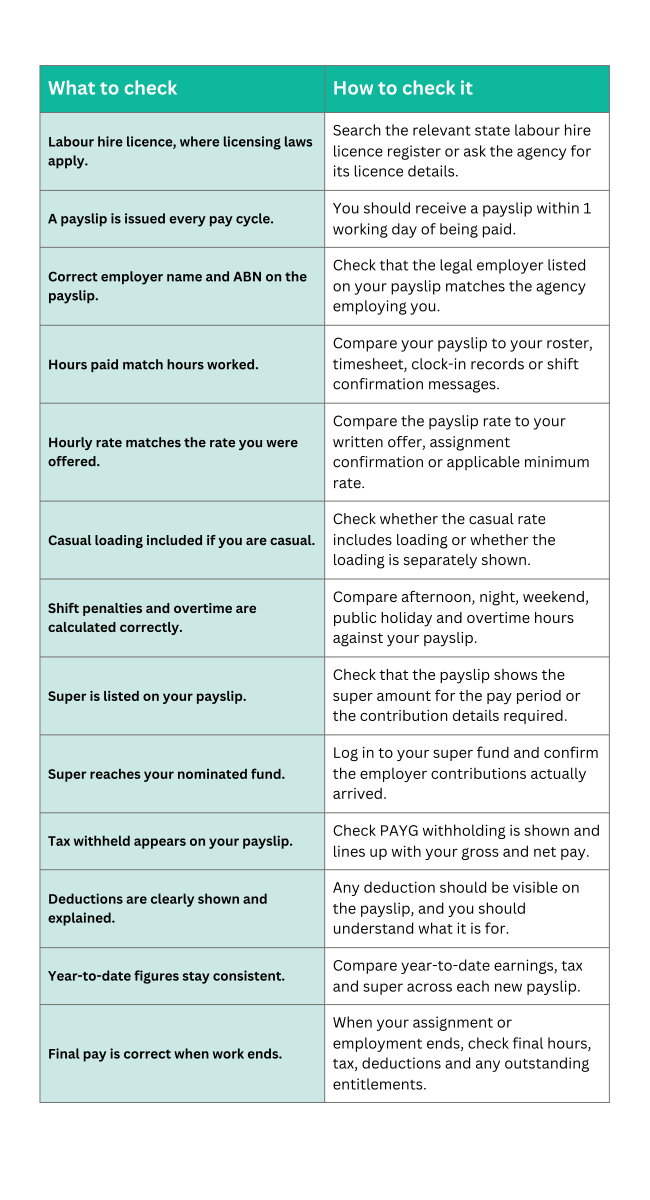
Super is important, but it is only one part of employment compliance. If you work through a labour hire agency, you can also check the following items using your payslips, rosters, timesheets, super account and other records.

Related Blogs
Read news and insights into a variety of industries

Top 10 Smart Questions to Ask in a Job Interview
A job interview isn’t just an opportunity for the employer to assess you—it’s also your chance to evaluate whether the company, role, and team align with your career goals and values and skills. Asking insightful questions demonstrates your enthusiasm, strategic thinking, and genuine interest in the position. Here are ten smart questions to help you…

The essential guide to leave in Australia.
Understanding Leave and Entitlements in Australia When it comes to workplace rights and entitlements in Australia, the Fair Work Act 2009 and the National Employment Standards (NES) serve as the guiding frameworks. These laws ensure that employees are treated fairly and have access to leave entitlements for rest, health, and other personal matters. Below, we…

Powering Australia’s Future 2025 Report
Download the Powering Australia’s Future 2025 Report and gain exclusive insights into the industries driving Australia’s economy forward. Learn how innovations, workforce trends, and sustainability initiatives are shaping manufacturing, logistics, and more. What’s Inside: Manufacturing Growth: A 5% projected increase in output by 2025, driven by robotics, AI, and Industry 4.0 technologies. Workforce Challenges &…

Navigating Compliance in 2025: Business Priorities
In 2025, Australian companies are entering a transformative phase of compliance, driven by significant changes in legislation, including the Closing Loopholes Acts and the criminalisation of wage theft. For companies navigating this new era, understanding these changes and implementing effective compliance strategies is critical not only to avoid penalties but to maintain trust with employees…

Hiring is Just About Posting on Seek? Think Again!
Hiring the right talent has never been more complex. With AI-generated resumes flooding the market, screening candidates is no longer as simple as reviewing a CV and scheduling interviews. You might think posting a job on Seek or other platforms will get the right candidate knocking on your door, but it’s time to think again….

1 July 2024 (and beyond): New Minimum Wage and Superannuation Updates
As businesses plan their budgets for the new financial year, estimating payroll costs is essential. This year, we are fortunate to have received an early announcement from the Fair Work Commission regarding their decision on the annual Minimum Wage Review. This early insight will allow businesses to better forecast their wage costs for the next…
